

Policy Brief: Stakeholder Engagement for AI-Supported Labour Market Policies
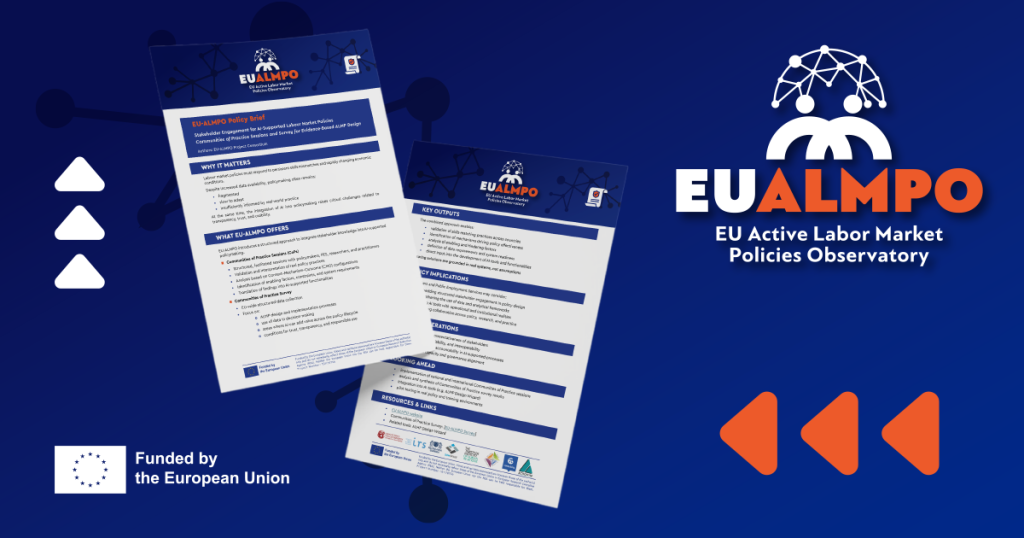
This policy brief explores how the EU-ALMPO project is integrating stakeholder insights into the development of AI-supported tools for labour market policies. It highlights key findings from the Communities of Practice Sessions and the Communities of Practice Survey, which aim to improve the design, implementation, and evaluation of Active Labour Market Policies (ALMPs) across Europe. […]
EU-ALMPO Launches Communities of Practice to Shape AI-Driven Skills Matching Tools
The EU-ALMPO project, a Horizon Europe initiative bringing together social sciences and artificial intelligence, is entering a new phase in April 2026. As part of it, it will launch its Communities of Practice (CoPs) focused on AI-supported skills matching policies. These won’t be typical meetings. Instead, they are designed as hands-on, collaborative spaces where stakeholders can share real experiences and help share AI tools that will be tested in the second half of […]
EU-ALMPO 3rd TPM in Patras: From Progress to Real Impact
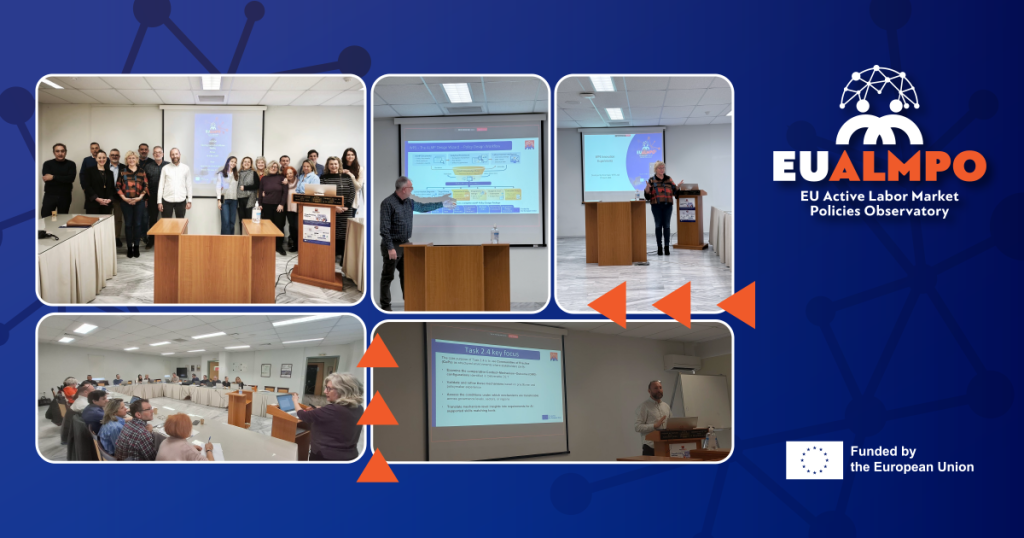
The 3rd Transnational Project Meeting of EU-ALMPO took place in Patras, Greece, from 17 to 19 March 2026, marking a decisive transition from development to real-world implementation. Partners came together not only to review progress, but to align on the next phase: turning AI-driven tools into practical solutions for labour market policy. Significant progress has been […]
EU-ALMPO Launch Event: Harnessing AI to Strengthen Labour Market Policymaking
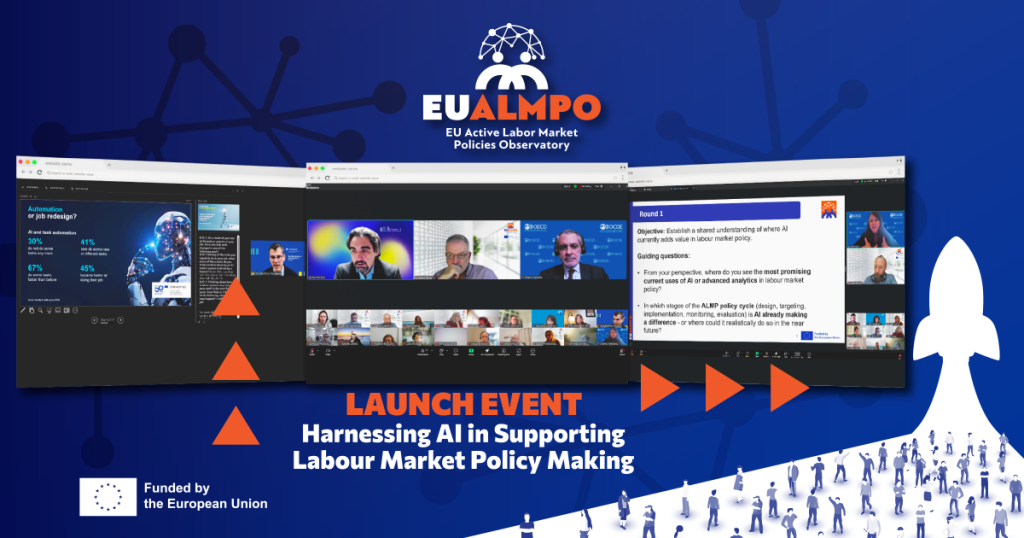
On 10 February 2026, the Horizon Europe project EU-ALMPO – EU Active Labour Market Policies Observatory held its high-level Launch Event titled “Harnessing AI in Supporting Labour Market Policy Making.” While described as a “Launch Event,” the project officially began one year earlier. The event therefore marked an important milestone, signalling the transition from foundational […]
An Analytical Framework for Addressing Skills Mismatch through ALMPs
Developing the EU-ALMPO Analytical Framework Analytical frameworks are widely used to structure reasoning in a clear and coherent manner. By drawing on shared categories and conceptual dimensions, they facilitate the understanding of complex phenomena and enable evidence to be assessed consistently across different contexts. For these reasons, such tools are particularly valuable in the field […]
The Challenge: Making AI Reliable

In the domain of public policy, accuracy is paramount. A “hallucination”—where an AI invents facts—is not merely a technical glitch but a fundamental liability that undermines the credibility of policy analysis. To address this challenge, modern AI systems employ Retrieval-Augmented Generation (RAG), a paradigm that requires the system to consult relevant documents before generating responses […]
EU-ALMPO Roundtable at the EfVET Annual Conference 2025: Building a More Inclusive and Data-Driven Future for VET

From 22 to 25 October 2025, the EfVET Annual Conference brought together hundreds of educators, researchers, and VET professionals in Fátima, Portugal, under the theme “Wellbeing in a Digitalised World – Crafting the Future of VET 2035.” During a dedicated roundtable session on 23 October, the EU-ALMPO consortium presented the project’s mission to transform the […]
From Evidence to Action: Shaping the EU ALMP Observatory in Gdańsk

How can research, technology, and policy come together to build fairer labour markets across Europe? This question guided the latest EU-ALMPO consortium meeting, held in Gdańsk, Poland (29-31/10), where partners gathered to review progress and plan the next steps toward the creation of the EU Active Labour Market Policies Observatory. The discussions in Gdańsk went […]
EU-ALMPO Milestone: Validation Workshop Shaping the Future of Active Labour Market Policies in Europe

We are excited to announce the successful completion of the EU-ALMPO Validation Workshop for the analytical framework, held online on 26th September 2025, hosted and facilitated by IRS (Istituto per la Ricerca Sociale). The event marked a major milestone in validating the project’s analytical and technological framework, bringing together partners, selected national and EU-level experts, […]
Matching Skills to Jobs: The Greek Challenge

One of the persistent challenges in the Greek labour market is the mismatch between the skills offered by training providers and the competencies demanded by employers. While linking the Vocational Education and Training (VET) provided with the knowledge and skills needed by the labour market is a central objective of the Greek VET system (Laws […]